How to Chat with Strangers Without Being Stupid About It
Anonymous chat is fun. But "anonymous" doesn't mean "invincible." Here's how to enjoy it without putting yourself at risk.
Let's be real — most "online safety guides" are written by people who've never actually used these platforms. They tell you to never talk to strangers at all, which defeats the purpose. This guide assumes you're going to chat with strangers (because it's genuinely fun and meaningful) and gives you practical, real-world advice for doing it without putting yourself at risk. We've built and moderated an anonymous chat platform, so we've seen what actually goes wrong — and most of it is preventable.
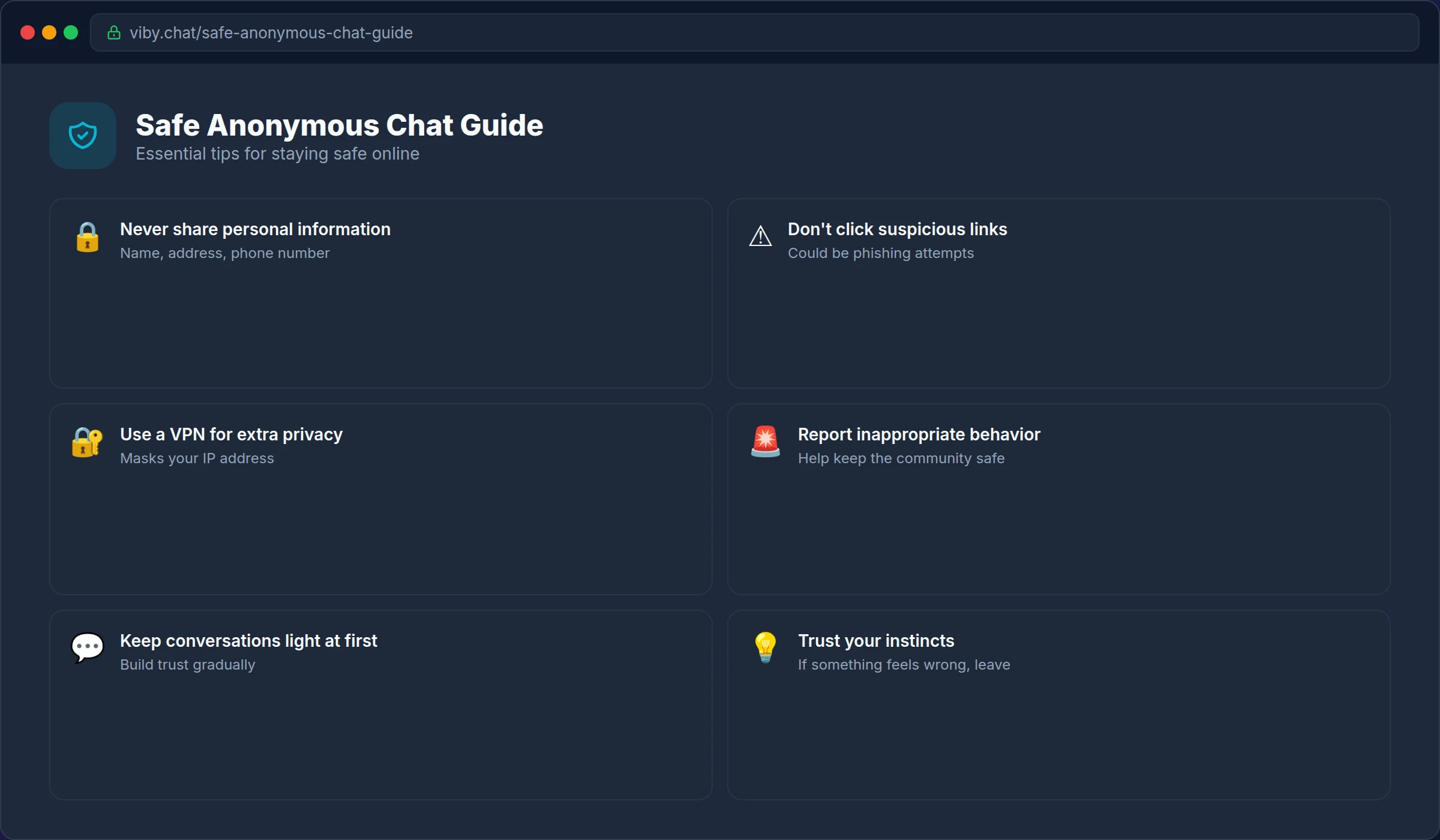
The Three Rules That Actually Matter
You don't need a 50-point checklist. Almost every bad outcome from anonymous chatting comes from breaking one of these three rules. We've seen thousands of conversations and the pattern is always the same — problems happen when people let their guard down and forget they're talking to a stranger.
Red Flags to Watch For
Most people on anonymous chat are normal and just bored. But some aren't. The good news is that problematic users almost always show the same patterns. Here's what should make you hit skip immediately:
Mistakes Even Smart People Make
You'd be surprised how often experienced internet users slip up on anonymous chat. It's usually not because they don't know better — it's because good conversation lowers your guard. Here are the most common ways people accidentally compromise their anonymity:
Choosing the Right Platform
Not all chat platforms treat your privacy equally. The platform you choose is your first line of defense. Here's what to look for when evaluating any anonymous chat service:
Before You Chat: Quick Safety Checklist
Run through this quick mental checklist before starting any anonymous chat session. It takes 10 seconds and can save you from common mistakes:
A Note for Parents
If your teenager is using anonymous chat sites (and statistically, they probably are), the worst thing you can do is panic and ban everything. They'll just use it behind your back on a friend's phone. Instead: talk to them about what not to share, explain why, and make sure they know they can come to you if something goes wrong without getting in trouble. Platforms like Viby require users to be 18+, but age verification on the internet is fundamentally broken everywhere. The best defense is education, not blocking. Have specific conversations about what information is safe to share and practice scenarios together. It's more effective than any parental control software.
What's Safe to Share?
| Information | Risk Level | Why |
|---|---|---|
| First name (common) | Low | Hard to identify you |
| Country | Low | Too broad to locate you |
| Hobbies & interests | Low | Generic, non-identifying |
| Age range | Low | Approximate is fine |
| City or town | Medium | Narrows location significantly |
| School / university | High | Easy to find you in person |
| Workplace | High | Publicly searchable |
| Full name | Critical | Instant Google identification |
| Phone / social media | Critical | Direct access to your identity |
| Photos of yourself | Critical | Reverse image search exists |
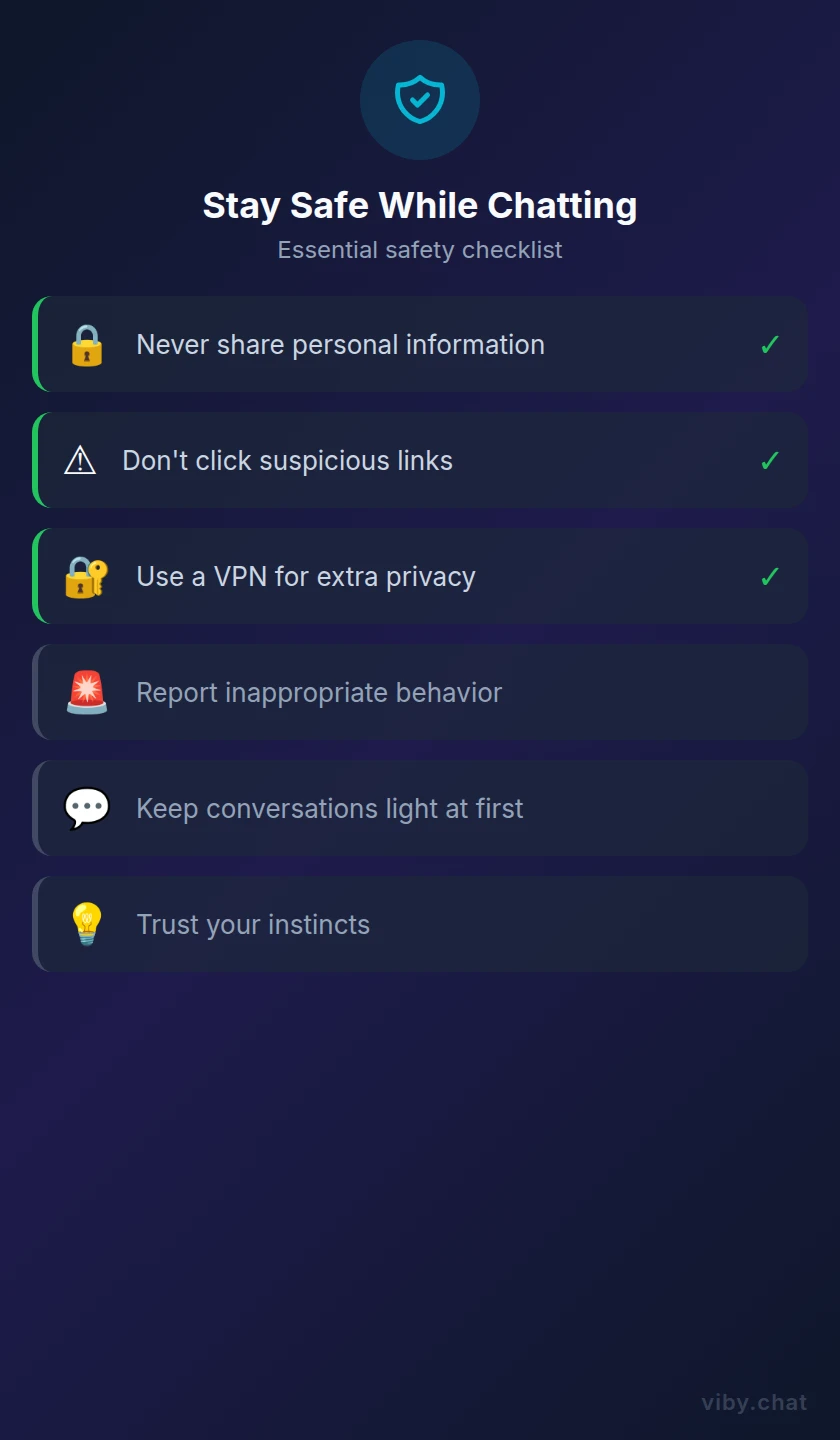
Works Perfectly on Mobile
Viby is built mobile-first — chat from anywhere, anytime.
Frequently Asked Questions
About as dangerous as talking to a stranger at a bar — which is to say, usually fine but you should use common sense. Don't share personal info, don't click suspicious links, and leave if something feels wrong.
On a well-built platform, no. Viby doesn't expose your IP to other users and doesn't store chat history. The main risk is you volunteering information about yourself.
Skip them immediately. On Viby, you can also report them. Don't engage, don't try to "win" the argument. Your time is better spent on the next conversation.
Yes. Anonymous chatting is legal in virtually every country. The platforms themselves may have rules (18+ age requirements, no illegal content), but using them is perfectly legal.
Generally yes, because you're not showing your face. On video, someone could screenshot you. On text, you're just words on a screen.
Articles
Free Text Chat
Free text chat with random strangers. No registration, no downloads. Just open and start chatting anonymously. Works on any device.
Random Chat
Random chat connects you with strangers instantly. No sign-up, no camera — just open Viby and start a conversation with someone you've never met.
Omegle Alternatives
Looking for Omegle alternatives? Here are the best random chat sites still working in 2026. Free, anonymous, and no sign-up required.
Ready to Chat the Smart Way?
Viby is built with privacy first. No accounts, no stored chats, no camera required. Just open and start talking.