Viby vs OmeTV: Text Chat vs Video Chat
OmeTV does video. Viby does text. It's not really about which is better — it's about what kind of conversation you want.
OmeTV is one of the biggest video chat roulettes still running, with over 10 million app downloads and millions of daily users. People use it to hop on camera with strangers from around the world. But video chat isn't for everyone — and that's exactly why Viby exists. The text vs. video debate isn't about which is objectively better. It's about which type of conversation you want to have tonight. Here's an honest comparison of two very different approaches to the same idea: talking to strangers.
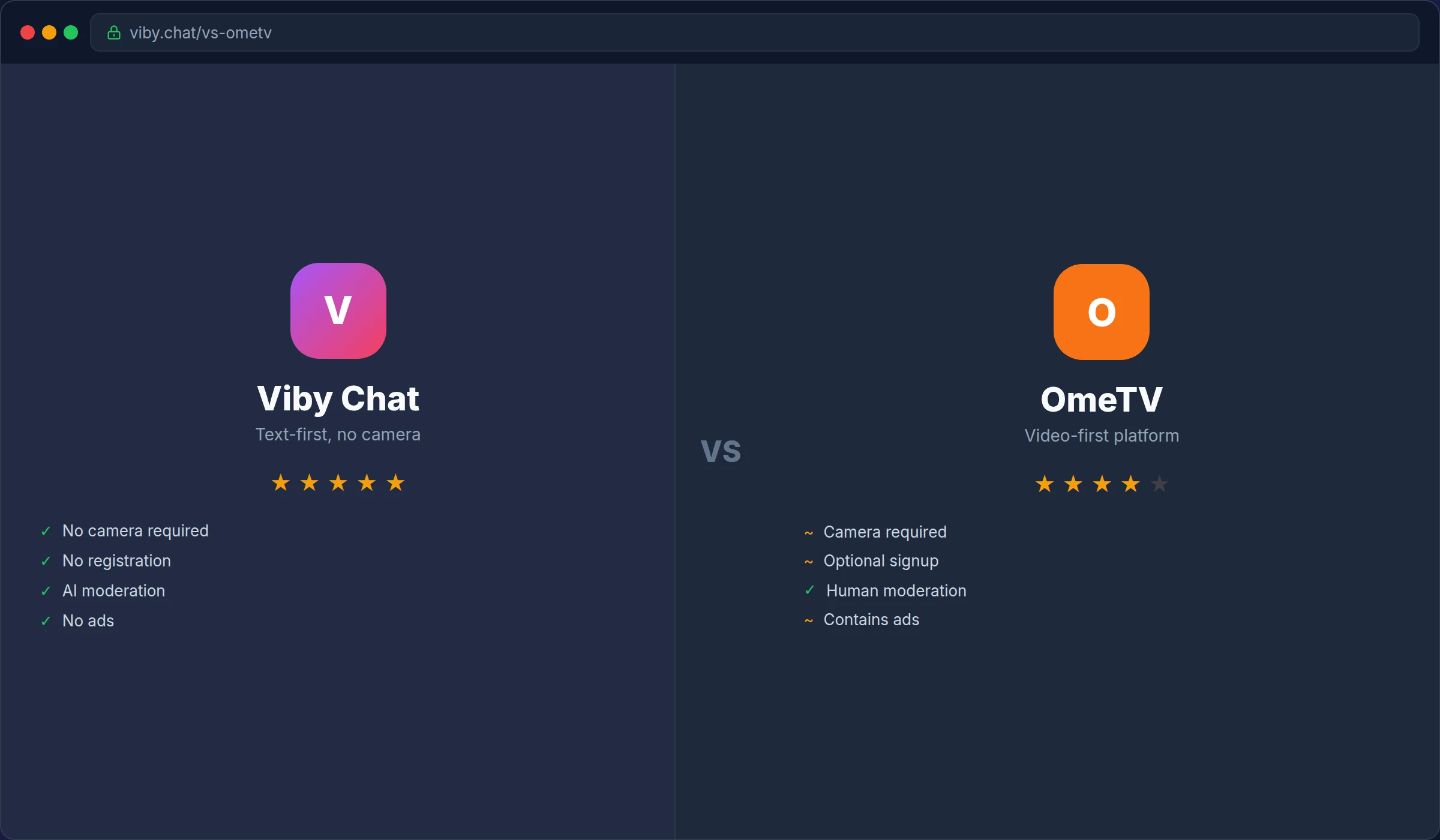
What OmeTV Is
OmeTV is basically Chatroulette with better moderation. You turn on your camera, get matched with a random person, and either talk or skip. It's available as an app and in browsers. The platform is well-established and has a large userbase, especially in Europe and Latin America. With over 10 million app downloads and consistent daily traffic, it's one of the most popular video chat roulettes in the world.
How Viby Is Different
Viby is text-only, and that's a deliberate choice. When you remove the camera, the whole dynamic shifts. People type what they actually think instead of performing for a lens. There's no worrying about lighting, your background, or what you look like. Just words. This isn't a limitation — it's a design decision based on the observation that the most meaningful conversations on the old Omegle happened in the text section, not video.
Quick Comparison
| Feature | Viby | OmeTV |
|---|---|---|
| Chat type | Text | Video |
| Camera required | No | Yes |
| Sign-up required | No | No |
| Gender filter | Free | Premium |
| Age filter | Yes | No |
| Mobile app | Browser-based | Yes |
| Languages | 15 | Multiple |
| Cost | Free | Freemium |
| Privacy level | High | Lower |
| Bandwidth needed | Minimal | High |
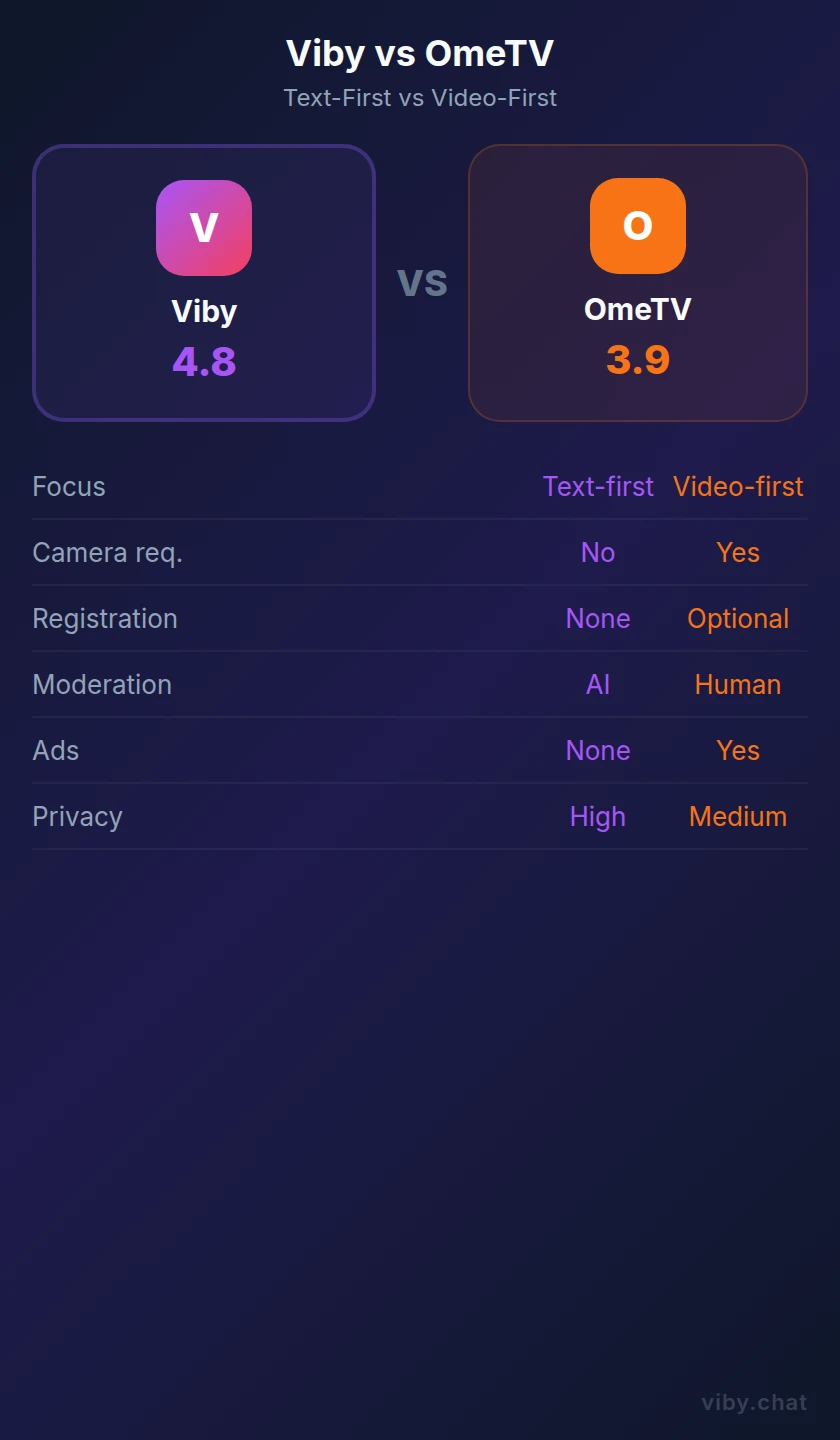
Works Perfectly on Mobile
Viby is built mobile-first — chat from anywhere, anytime.
Where Viby Wins
When you compare the actual day-to-day experience rather than feature lists, the differences become pretty clear. These aren't theoretical advantages — they're things that affect every single session:
No camera required — Skip the grooming, the good lighting, and the anxiety of showing your face to strangers. Just type.
Free gender filter — OmeTV charges for this. On Viby, choose who you want to chat with at no cost.
Works everywhere — No app to download, no storage space needed. Open any browser tab and go.
15 languages — Viby's interface works natively in 15 languages. OmeTV's translation coverage is thinner.
Zero permissions — No camera access, no microphone, no location. Viby asks for nothing because it needs nothing.
The Privacy Angle
This is where the biggest difference shows up, and it's honestly the main reason many people prefer text over video for random chat. Video chat and text chat have fundamentally different privacy profiles, and it's worth understanding what you're giving up with each approach:
Why Some People Prefer Text
Video chat is exciting but it comes with baggage. You need to look presentable. You need a quiet room. You need to be in a place where you can talk out loud. Text has none of that. You can chat from bed, from the bus, from a boring lecture. And honestly? People are more open in text. They share things they'd never say on camera. This isn't just our opinion — it's backed by decades of communication research on online disinhibition.
When OmeTV Makes More Sense
If you specifically want face-to-face interaction with strangers, OmeTV does that well. It's polished, the app works smoothly, and the moderation is decent compared to some video chat alternatives. Video chat adds a layer of connection that text can't fully replicate — you see facial expressions, hear tone of voice, pick up on body language and energy. If that matters to you, OmeTV is a solid choice. It also has real-time translation, which is genuinely useful for cross-language conversations. But remember — that face-to-face element comes with a privacy trade-off that's worth thinking about seriously.
Questions People Ask
OmeTV has decent moderation for a video platform, but you're still showing your face to strangers. Viby avoids this entirely since there's no camera involved.
Technically no — the camera is required. If you don't want to be on camera, Viby is the better option since it's text-only.
Viby lets everyone filter by gender and age for free. OmeTV locks gender filter behind premium and doesn't offer age filtering at all.
Basic use is free but the gender filter and ad-free experience require payment. Viby is completely free with all features included.
Not on either platform. OmeTV is video-only, Viby is text-only. They're designed for different moods and preferences.
OmeTV has a larger established userbase, especially on mobile (10M+ app downloads). Viby's userbase is growing rapidly and tends to be more internationally diverse across 15 languages.
Yes, OmeTV has a web version, but the app is where most users are and where the experience is best. Viby is browser-first by design and works equally well on desktop and mobile without any app installation.
Text chat on Viby, hands down. Most introverts find video calls with strangers draining. Text lets you take your time, think about your responses, and chat without the social pressure of being on camera.
Articles
Viby vs Emerald Chat
Viby vs Emerald Chat: which random chat site is actually better? We compare signup, matching, moderation, and real user experience.
Omegle Alternatives
Looking for Omegle alternatives? Here are the best random chat sites still working in 2026. Free, anonymous, and no sign-up required.
Random Chat
Random chat connects you with strangers instantly. No sign-up, no camera — just open Viby and start a conversation with someone you've never met.
Prefer Talking Without a Camera?
Not everyone wants video chat. If text is your thing, Viby gets you into a conversation in seconds — no camera, no app, no account.