What Happened to Omegle?
The platform that defined anonymous chat is gone. Here's the real story of why — and what came next.
If you've tried visiting omegle.com recently, you already know — it's done. After 14 years of connecting strangers, Omegle shut down permanently on November 8, 2023. The site now shows a farewell message from founder Leif K-Brooks. But the shutdown didn't happen overnight. It was the end of a long, complicated story.
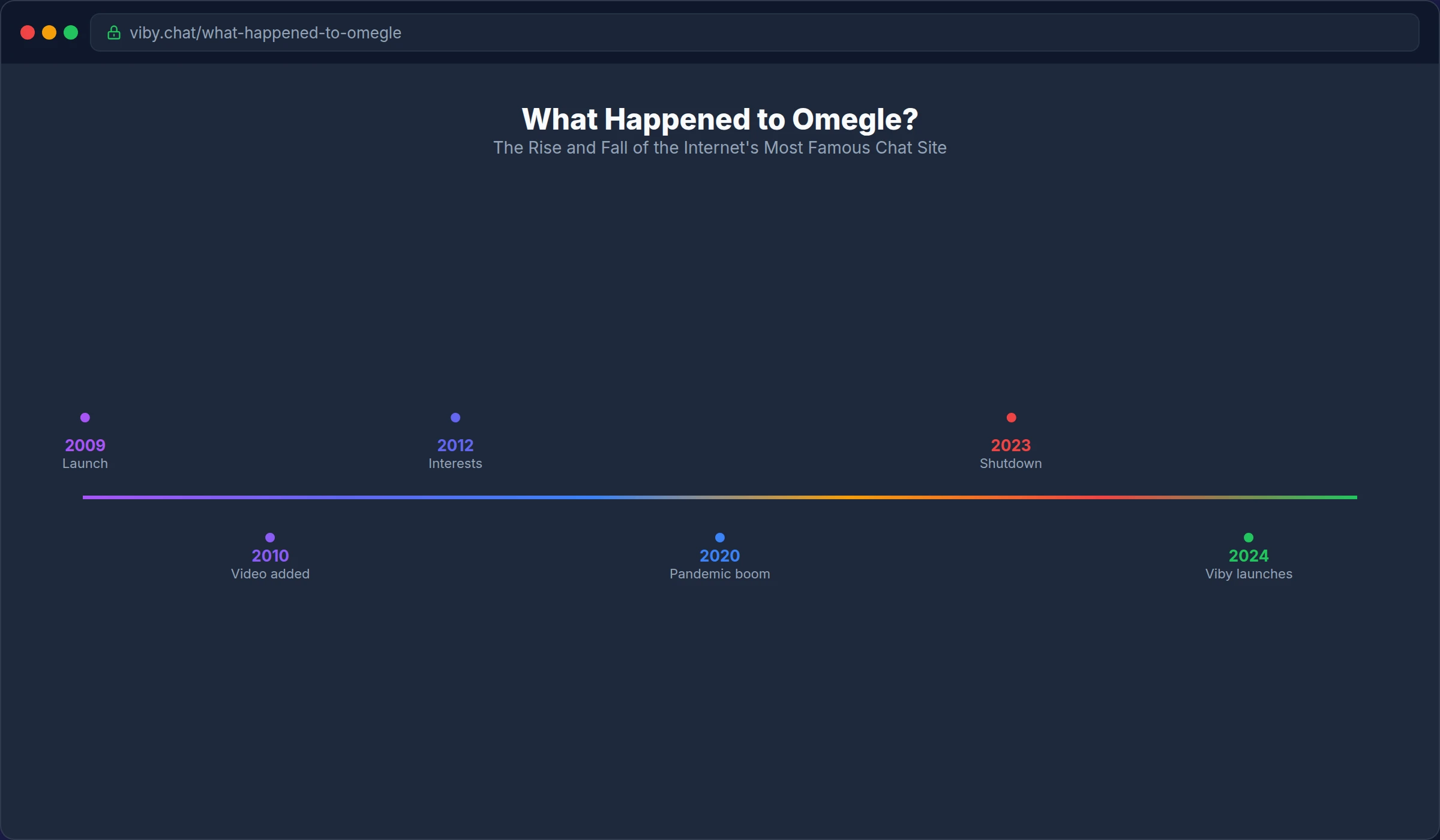
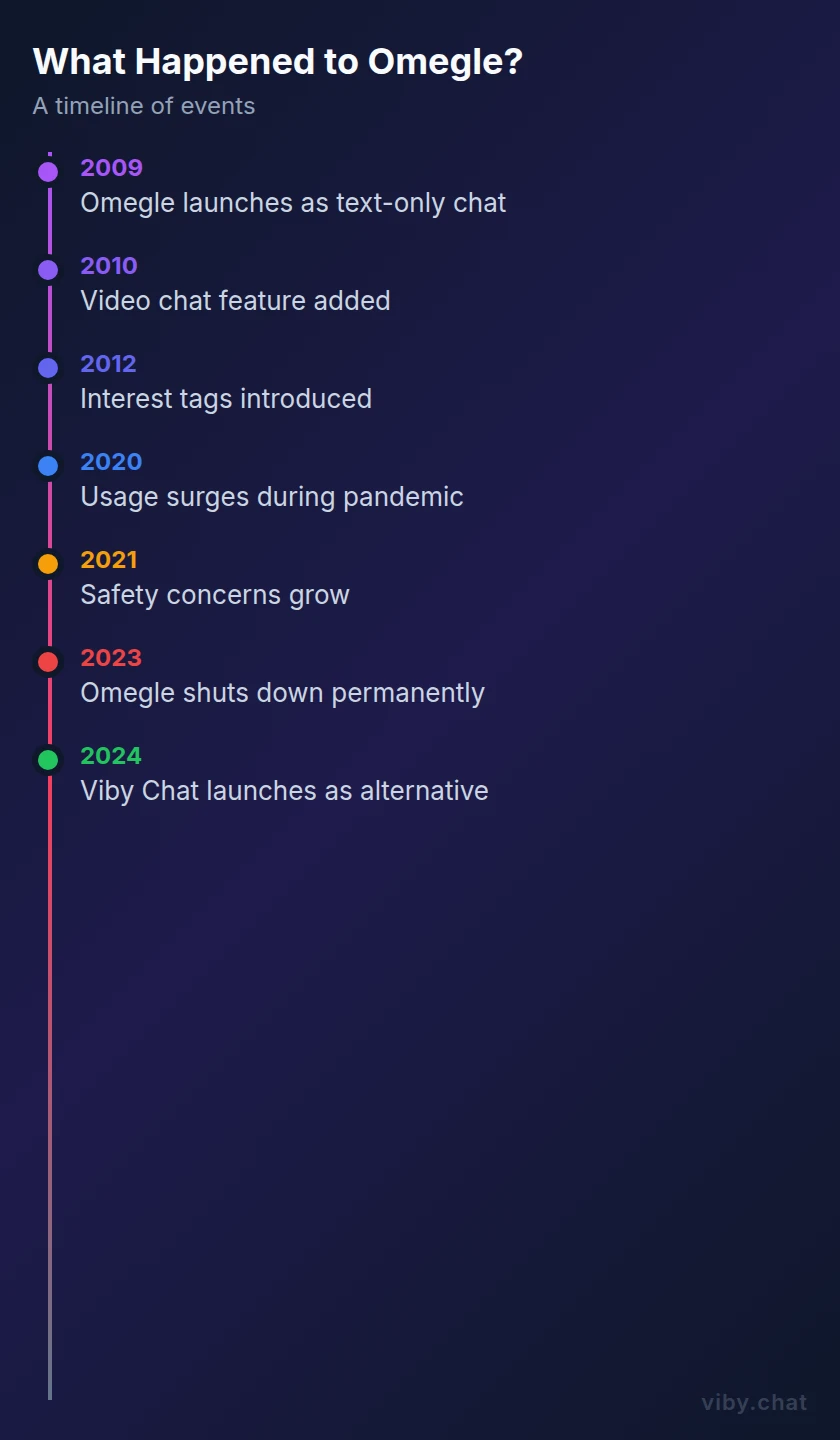
Omegle Timeline
Leif K-Brooks launches Omegle as a text-only chat platform
Video chat feature added, user base explodes
Spy mode and interest tags introduced
Peak popularity — 50M+ monthly visits
A.M. v. Omegle lawsuit filed over child safety
Omegle shuts down permanently on November 8
Post-Omegle alternatives surge — traffic to random chat sites increases 300%
Viby launches with text-first approach and multilingual support
The Rise of Omegle: 2009–2019
Leif K-Brooks launched Omegle in 2009 when he was just 18 years old. The concept was dead simple: connect two random strangers for a conversation. No sign-ups, no profiles, no friend lists. Just you and someone you'd never met before. It was inspired by the simple idea that talking to strangers can be fun and enlightening — something most social platforms had stopped facilitating. What started as a side project quickly became one of the most-visited sites on the internet.
Why Omegle Actually Shut Down
The short answer: lawsuits. The longer answer is more nuanced. A lawsuit filed in 2021 alleged that Omegle had matched an 11-year-old with a sexual predator. The case went to trial, and while the legal details are complex, it exposed something Omegle couldn't defend — the platform had known about child safety issues for years and hadn't done enough. The legal precedent set by this case sent shockwaves through the entire anonymous chat industry.
The Legal Precedent
Omegle's shutdown wasn't just about one website. It set a precedent that every platform facilitating stranger-to-stranger connections has to take seriously now. The core legal question — whether a platform is liable for what users do on it — remains partially unresolved, but the direction is clear. New platforms launching in this space are building their entire legal and technical infrastructure around these precedents:
The Aftermath
Omegle's closure created a vacuum in the anonymous chat space. Millions of users who relied on the platform for social interaction — some for genuine connection, some for entertainment, some for less savory purposes — suddenly had nowhere to go. The reaction was split, and the ripple effects are still being felt across the internet.
Where Did Omegle Users Go?
Some users moved to existing alternatives like Chatroulette, which had been around since 2009 but always played second fiddle to Omegle. Others tried newer platforms. Many simply stopped — the magic of random chat felt tied to Omegle specifically. But the demand for anonymous, spontaneous conversation hasn't gone away. If anything, it's grown in the years since the shutdown. People are tired of curated social media personas and algorithmic feeds. They want real talk with real strangers. The numbers prove it — search volume for anonymous chat platforms is now higher than it was when Omegle was still operating.
Viby: Built for What Comes Next
Viby exists because the alternatives weren't cutting it. We watched the same post-Omegle scramble everyone else did and saw platforms that were either too sketchy, too complicated, or too focused on video. Text chat is where honest conversations happen — when you strip away the camera, people actually talk. Viby is anonymous, free, and connects you in seconds. It's what Omegle should have evolved into. Built with privacy-first architecture and modern moderation from day one, not as an afterthought.
Omegle vs Modern Alternatives
| Feature | Omegle (was) | Modern Platforms |
|---|---|---|
| Viby | N/A | Text, free, no sign-up |
| Moderation | Minimal | Active AI + human review |
| Sign-up required | No | Varies by platform |
| Text chat | Yes | Yes |
| Video chat | Unmoderated | Usually moderated |
| Age verification | Self-reported | Self-reported |
| Chat logs stored | No | Varies |
| Mobile app | No | Most have one |
| Still active | Closed Nov 2023 | Yes |
Works Perfectly on Mobile
Viby is built mobile-first — chat from anywhere, anytime.
Frequently Asked Questions
Yes. Omegle closed on November 8, 2023. Founder Leif K-Brooks posted a farewell letter and the site has not returned. The domain shows only the goodbye message.
A combination of factors — primarily a 2021 lawsuit (A.M. v. Omegle) alleging the platform facilitated child exploitation, plus the personal and financial toll on the founder. K-Brooks said operating the site was no longer sustainable.
There's been no indication of this. K-Brooks has not sold the platform and the farewell message remains. Any sites claiming to be 'Omegle 2.0' or 'new Omegle' are unrelated clones.
For text chat, Viby is the closest to the original Omegle experience — anonymous, free, no sign-up. For video chat, Chatroulette is the most established alternative.
Omegle itself wasn't illegal, but it faced legal challenges over insufficient moderation of illegal activity on the platform. The 2021 lawsuit was a significant factor in its closure.
Articles
Omegle Alternatives
Looking for Omegle alternatives? Here are the best random chat sites still working in 2026. Free, anonymous, and no sign-up required.
Random Chat
Random chat connects you with strangers instantly. No sign-up, no camera — just open Viby and start a conversation with someone you've never met.
Viby vs OmeTV
Viby vs OmeTV compared: text vs video, privacy, matching, and real experience. Find out which random chat platform fits you.
The Conversation Continues
Omegle is gone, but the best parts of it live on. Try Viby — anonymous chat, done right.